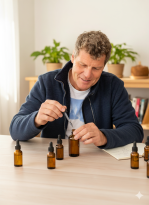
Content 50 ml
Recommended treatment
Free shipping on orders of more than € 30.00
VAT included

You're on holiday: your body's on a lovely sunny beach where you should be feeling relaxed. But your mind's still stuck in work mode, stressing about all the things you should have done before leaving and what you'll have to do when you go back. What a waste of your precious holiday time!
Does this scenario sound familiar? Unfortunately, with today's 24/7 "always-on" lifestyle, increasing numbers of us find it takes longer to switch off and feel relaxed after a day's work or when taking a holiday.
But making time for relaxing is essential to keep your mind and body healthy. We all need time for ourselves to help us deal with life's challenges. If you're feeling stressed, Bach Flower Mix 71 can help you to relax and feel less anxious and irritable so that you can enjoy your time off.
We've rounded up a few tips to help you relax completely and make the most of your time off. All it takes is five minutes every day: if you can carve out this time for yourself, it's easy to fit a simple relaxation technique. Here are some effective strategies to try:
Breathing exercises are an effective way to feel calm and relaxed whenever you need to de-stress.
Mental stress often leads to physical discomfort - tension can accumulate in your shoulders, lower back or jaw, or you may find you get headaches. If you can get rid of physical stress, you'll instantly feel calmer. Try this strategy:
Writing down worries and fears helps many people to relax. When you feel stressed, write down your thoughts and feelings. Keep a special notebook or journal, use a notes app on your phone or simply write your thoughts on a scrap of paper and then throw it away. Expressing your thoughts will release some stress and help you to feel more tranquil.
When we're stressed, we often feel negative and forget everything we should be grateful for. So every day, think of three positive things that happened to you. They can be small things, such as coffee in the garden, a chat with a neighbour or a walk at lunchtime. Write them down. Making a list of all the good things in your life will help you to replace negative thinking with positivity and optimism and drive your cares away.
Sit quietly where you won't be disturbed. Close your eyes and imagine a place where you've always felt the most relaxed and calm. It could be on a beach, in a forest or at a cosy fireside. Now visualise the details that you remember using all your senses: sound, sight, smell, taste and touch. For example, if you think of a comfortable, firelit room, you might imagine the scent of flowers, music softly playing, the taste of a cup of tea or a glass of wine, the feel of a soft cushion behind your back. The deeper and more detailed your visualisation, the more you'll relax.
Research shows that spending time in nature is an effective way of calming down. When you're stressed, one of the easiest and most effective ways to relax is to go outside and connect with nature, even for just a few minutes. Look at trees and flowers, listen to the birds and feel the breeze on your face. And you don't always have to go outside to feel nature's soothing effects. Watching a TV programme about animals or gardening, or just looking at images of greenery on your screen can also help you de-stress.
Relaxation isn't just for adults; children and teenagers also feel stressed at times. If you think your child is tense and needs help to relax, teach them some of these strategies, or practise them together.
Stress is inevitable in your life, but you don't have to let it get the better of you. Instead, take control and learn how to relax.
If you're still struggling to chill out, it might be time to look at the bigger picture and consider whether there are elements in your life that you need to change. Relaxation should be an integral part of your daily routine rather than a challenge!
Sources:
https://www.mind.org.uk/information-support/tips-for-everyday-living/relaxation/relaxation-tips/
https://www.theguardian.com/lifeandstyle/2018/dec/26/relax-life-changing-how-to-find-comfort-zone
Created by Tom Vermeersch

Tom Vermeersch is a certified Psychologist and Bach flower expert with more than 30 years of experience.

12 easy ways to get people to like you
Have you ever noticed that some people are instantly likeable? Many people believe that people will only like you because of natural traits you're born with: good looks, talent and sociability. But this is a misconception. Getting people to like you is within your control, and it's all to do with self-belief, knowing yourself and being emotionally intelligent. Here's what to do to be more likeable.

Six things we think will make us happy, but don't!
When you think about things that will make you happy, what are the images that come to mind? Wealth, beauty, a dream house, long holidays, a top of the range car? Happiness is not a constant and how happy we feel depends on the way we choose to live our lives.

Dealing with British Summer Time
Some people are overly sensitive to the time change and it can take days, if not weeks, for them to feel right again, while others barely even notice.

Bad habits waste your energy and time. They disrupt your life, risk your health and stop you from achieving your aims. So why do we do them? And what can we do to break our bad habits?

Letting go of the past: 5 tips
Lynn Anderson told it very nicely in her song “I beg your pardon; I never promised you a rose garden”. Life isn’t all roses and everybody experiences something they would rather not once in their life.

Subtle signs your child is unhappy
According to figures from the World Health Organisation, more than 260 million people worldwide suffer from depression. And it's not only adults who are diagnosed with this illness. Children as young as three or four years old can experience depression.

What are your aims in life? Do you plan to be rich, to be a top footballer, to be a good parent, or to become Prime Minister? However efficiently you plan your life, sooner or later you are going to come up against obstacles to achieving your goals.

Signs you're slipping into a burn-out
Learn how to recognise the signs of stress and avoid slipping into a burnout or a bore-out

How can I help my child achieve their dreams?
Children's imaginations know no limits and their dreams are a mix of hopes and fantasies, the real and the magical, the impossible and the achievable.

Can you accept things you can't change? Take our quiz!
Your relationship ends, or you lose your job, and you get stuck in a rut of negative thoughts and suffering. How good are you at letting go of grudges and accepting that some things are beyond your control? Take our quiz to find out!
You're on holiday: your body's on a lovely sunny beach where you should be feeling relaxed. But your mind's still stuck in work mode, stressing about all the things you should have done before leaving and what you'll have to do when you go back. What a waste of your precious holiday time!
Does this scenario sound familiar? Unfortunately, with today's 24/7 "always-on" lifestyle, increasing numbers of us find it takes longer to switch off and feel relaxed after a day's work or when taking a holiday.
But making time for relaxing is essential to keep your mind and body healthy. We all need time for ourselves to help us deal with life's challenges. If you're feeling stressed, Bach Flower Mix 71 can help you to relax and feel less anxious and irritable so that you can enjoy your time off.

We've rounded up a few tips to help you relax completely and make the most of your time off. All it takes is five minutes every day: if you can carve out this time for yourself, it's easy to fit a simple relaxation technique. Here are some effective strategies to try:
Breathing exercises are an effective way to feel calm and relaxed whenever you need to de-stress.
Mental stress often leads to physical discomfort - tension can accumulate in your shoulders, lower back or jaw, or you may find you get headaches. If you can get rid of physical stress, you'll instantly feel calmer. Try this strategy:
Writing down worries and fears helps many people to relax. When you feel stressed, write down your thoughts and feelings. Keep a special notebook or journal, use a notes app on your phone or simply write your thoughts on a scrap of paper and then throw it away. Expressing your thoughts will release some stress and help you to feel more tranquil.
When we're stressed, we often feel negative and forget everything we should be grateful for. So every day, think of three positive things that happened to you. They can be small things, such as coffee in the garden, a chat with a neighbour or a walk at lunchtime. Write them down. Making a list of all the good things in your life will help you to replace negative thinking with positivity and optimism and drive your cares away.
Sit quietly where you won't be disturbed. Close your eyes and imagine a place where you've always felt the most relaxed and calm. It could be on a beach, in a forest or at a cosy fireside. Now visualise the details that you remember using all your senses: sound, sight, smell, taste and touch. For example, if you think of a comfortable, firelit room, you might imagine the scent of flowers, music softly playing, the taste of a cup of tea or a glass of wine, the feel of a soft cushion behind your back. The deeper and more detailed your visualisation, the more you'll relax.
Research shows that spending time in nature is an effective way of calming down. When you're stressed, one of the easiest and most effective ways to relax is to go outside and connect with nature, even for just a few minutes. Look at trees and flowers, listen to the birds and feel the breeze on your face. And you don't always have to go outside to feel nature's soothing effects. Watching a TV programme about animals or gardening, or just looking at images of greenery on your screen can also help you de-stress.
Relaxation isn't just for adults; children and teenagers also feel stressed at times. If you think your child is tense and needs help to relax, teach them some of these strategies, or practise them together.
Stress is inevitable in your life, but you don't have to let it get the better of you. Instead, take control and learn how to relax.
If you're still struggling to chill out, it might be time to look at the bigger picture and consider whether there are elements in your life that you need to change. Relaxation should be an integral part of your daily routine rather than a challenge!
Sources:
https://www.mind.org.uk/information-support/tips-for-everyday-living/relaxation/relaxation-tips/
https://www.theguardian.com/lifeandstyle/2018/dec/26/relax-life-changing-how-to-find-comfort-zone
Have you ever noticed that some people are instantly likeable? Many people believe that people will only like you because of natural traits you're born with: good looks, talent and sociability. But this is a misconception. Getting people to like you is within your control, and it's all to do with self-belief, knowing yourself and being emotionally intelligent. Here's what to do to be more likeable.
When you think about things that will make you happy, what are the images that come to mind? Wealth, beauty, a dream house, long holidays, a top of the range car? Happiness is not a constant and how happy we feel depends on the way we choose to live our lives.
Some people are overly sensitive to the time change and it can take days, if not weeks, for them to feel right again, while others barely even notice.
Read the complete article
Bad habits waste your energy and time. They disrupt your life, risk your health and stop you from achieving your aims. So why do we do them? And what can we do to break our bad habits?
Lynn Anderson told it very nicely in her song “I beg your pardon; I never promised you a rose garden”. Life isn’t all roses and everybody experiences something they would rather not once in their life.
Read the complete article
According to figures from the World Health Organisation, more than 260 million people worldwide suffer from depression. And it's not only adults who are diagnosed with this illness. Children as young as three or four years old can experience depression.
What are your aims in life? Do you plan to be rich, to be a top footballer, to be a good parent, or to become Prime Minister? However efficiently you plan your life, sooner or later you are going to come up against obstacles to achieving your goals.
Learn how to recognise the signs of stress and avoid slipping into a burnout or a bore-out
Children's imaginations know no limits and their dreams are a mix of hopes and fantasies, the real and the magical, the impossible and the achievable.
Your relationship ends, or you lose your job, and you get stuck in a rut of negative thoughts and suffering. How good are you at letting go of grudges and accepting that some things are beyond your control? Take our quiz to find out!
Read the complete articleBach Flowers are not medicinal but harmless plant extracts which are used to support health.
© 2026 Mariepure - Webdesign Publi4u

Are you unsure which Bach flowers can help you? Contact Tom for free advice.