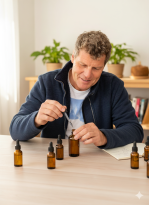
Content 50 ml
Recommended treatment
Free shipping on orders of more than € 30.00
VAT included

It's natural to compare our own lives with those of others - weighing up the pros and cons of situations helps us make decisions. But there can be a downside when you find you're constantly comparing yourself with others, envying their seemingly perfect lives and wondering why they are luckier, more prosperous, and better looking than you.
The risk is that you get trapped in a cycle of envy, that feeling you get when you want a fair share of what someone else has. And you can't be happy when that person does well, either.
Jealousy often arises as protection from feelings of vulnerability and low self-esteem. Bach Flower Mix 44 can help to boost your self-belief and drive away bitterness and resentment.
Are you envious when you see someone posting on social media about their new job or fantastic holiday? Do you think that everyone else has a better life than you? Let's face it; no one's going to post about a job they hate, a row with their partner, or the holiday from hell! Mostly, people post a flattering, carefully-edited version of their lives.
So the next time you feel jealous and resentful about someone's social media posts, there are a couple of tactics that can help. Firstly, remember that you can only see what they want you to see. The reality might be very different from what you can see on the surface. They may appear to "have it all" and be respected and well-liked. But behind closed doors, their actual lives may be very different. So remember that what you think you know is not always the truth.
Secondly, while the lives of the rich and famous may seem desirable, a glamorous lifestyle has its downsides. For example, would you want to have people scrutinising the details of all your public appearances - and as much of your private life as they can discover?
Take a moment and think about how you really want your life to be. For example, do you beat yourself up because you don't have a wide circle of friends? Do you wonder why other people are more popular?
Look at things from another perspective and ask yourself what would "being more popular" bring you? Maybe being constantly in demand for social occasions would give you a sense of belonging, but you might find that you miss having time to spend as you like. If you were a high-flyer in your career, you might well be more affluent, and it might boost your self-esteem, but you might be more stressed and unhappy.
Maybe what you want is already close at hand. Perhaps you have a loving partner, a family, pets, a few good friends, and time to spend on hobbies? Would being more popular - especially on social media - make you any happier?
Next time you are envious of something someone else has and ask yourself, "Why not me?", dig down to the essentials of what you think that "something" would give you. The chances are that you already have it!
How much do you truly desire what someone else has? Would you be prepared to swap your life for theirs? The following exercise will help you decide if you want to change direction in your life - it's a comparison game!
Remember that if you want someone else's life, you have to be willing to do a complete swap; that is, you would have to give up your life as it is and swap over to theirs.
Think of someone whose lifestyle you wish you had. Now take some paper and divide it into two columns. In the first column, write down all they have that you don't. For example, do they have a perfect husband or wife, a lovely house, or lots of money?
Then in the second, list everything you have that they don't. Be sure to include everything you appreciate and value in your life - family, friends, or pets. But this time, you're not considering these things as objects, but rather as what they mean to you and the unique connection and relationship that exists between you and your loved ones.
Try to think about specific aspects of your life that you value. For example, do you love finishing work early on Fridays because it gives you time to go paddleboarding in the afternoon?
Look at the two columns. You'll probably discover that the second list is much longer than the first. Now ask yourself, would you be prepared to give up any of the things you love to have the things you envy?
You may well decide that the good things on your list are just as valuable - or even more valuable - than the things the other person has that you've envied.
We feel jealous and bitter because we often forget to pay attention to the good stuff in our lives. Happy people are not necessarily rich, famous or powerful. Instead, they've chosen to be happy by practising gratitude for what they have.
So every day, ask yourself these questions:
Doing this will help you assess what's important in your life and feel more content.
We're conditioned to strive to do more and have more in our society. But wealth doesn't always equate to contentment. The things we can acquire through wealth cannot bring lasting happiness. When buying a new car or the latest sneakers, the buzz you get fades rapidly. These things are not valuable in themselves - they stand for other qualities that you can achieve regardless of how rich you are.
Learning to deal with envy will steer you towards contentment, well-being and happiness. Would wealth, reputation or possessions bring you joy or do love, serenity, and the freedom to live your life as you wish bring true happiness?
Of course, that doesn't mean you have to accept that everything stays the same. You can still achieve your goals and dreams, such as finding a more fulfilling job or spending more time with your family and friends. But focusing on gratitude for the things you have instead of envy for the things that others have will lead you to a more well-balanced, happier life.
Sources:
https://www.psychologytoday.com/gb/blog/prescriptions-life/201803/how-stop-comparing-yourself-others
https://www.nursingtimes.net/news/mental-health/how-use-of-social-media-and-social-comparison-affect-mental-health-24-02-2020/
Created by Tom Vermeersch

Tom Vermeersch is a certified Psychologist and Bach flower expert with more than 30 years of experience.

Do you suffer from a disorder known as "musturbation"? This term was first coined in the 1950s by psychotherapist Albert Ellis and described the way a negative inner voice rules our minds and bludgeons us with words such as "must", "should", and "ought".

Can we learn from our mistakes and develop a stronger, healthier emotional bondwith our kids? To help you identify your weak spots, we’ve rounded up some of the most common mistakes parents make.

Sometimes it’s hard to notice when we've become trapped in familiar routines. Take our quiz to find out if you’re stuck in a rut and what you can do about it.

Can you accept things you can't change? Take our quiz!
Your relationship ends, or you lose your job, and you get stuck in a rut of negative thoughts and suffering. How good are you at letting go of grudges and accepting that some things are beyond your control? Take our quiz to find out!

Letting go of the past: 5 tips
Lynn Anderson told it very nicely in her song “I beg your pardon; I never promised you a rose garden”. Life isn’t all roses and everybody experiences something they would rather not once in their life.

Did you get stuck in the past?
Do you find yourself often thinking about your past? Do you wish you could turn back the clock to days gone by or things as they were before covid disrupted the world?

What to do when the spark is fading
Why do you feel butterflies at the start of a new romance, and how can you keep the flame burning in a long term relationship as the spark starts to fade?

Letting go: A guide for survivors
Facing the loss of a family member or close friend is probably one of the most difficult challenges that life throws at us. When we've lost a partner, parent, brother or sister, we're likely to experience intense grief.

What makes it so hard to go back to school?
Going back to school during a pandemic is a new experience for everyone, and it's understandable if children are feeling anxious about it. We take a look at some of the issues and how you can help your child to get ready for returning to the classroom.

While you often hear people joking that they have OCD because they like to keep their house clean and tidy, Obsessive Compulsive Disorder can be a distressing and debilitating mental health condition with a wide range of symptoms.
It's natural to compare our own lives with those of others - weighing up the pros and cons of situations helps us make decisions. But there can be a downside when you find you're constantly comparing yourself with others, envying their seemingly perfect lives and wondering why they are luckier, more prosperous, and better looking than you.
The risk is that you get trapped in a cycle of envy, that feeling you get when you want a fair share of what someone else has. And you can't be happy when that person does well, either.
Jealousy often arises as protection from feelings of vulnerability and low self-esteem. Bach Flower Mix 44 can help to boost your self-belief and drive away bitterness and resentment.

Are you envious when you see someone posting on social media about their new job or fantastic holiday? Do you think that everyone else has a better life than you? Let's face it; no one's going to post about a job they hate, a row with their partner, or the holiday from hell! Mostly, people post a flattering, carefully-edited version of their lives.
So the next time you feel jealous and resentful about someone's social media posts, there are a couple of tactics that can help. Firstly, remember that you can only see what they want you to see. The reality might be very different from what you can see on the surface. They may appear to "have it all" and be respected and well-liked. But behind closed doors, their actual lives may be very different. So remember that what you think you know is not always the truth.
Secondly, while the lives of the rich and famous may seem desirable, a glamorous lifestyle has its downsides. For example, would you want to have people scrutinising the details of all your public appearances - and as much of your private life as they can discover?
Take a moment and think about how you really want your life to be. For example, do you beat yourself up because you don't have a wide circle of friends? Do you wonder why other people are more popular?
Look at things from another perspective and ask yourself what would "being more popular" bring you? Maybe being constantly in demand for social occasions would give you a sense of belonging, but you might find that you miss having time to spend as you like. If you were a high-flyer in your career, you might well be more affluent, and it might boost your self-esteem, but you might be more stressed and unhappy.
Maybe what you want is already close at hand. Perhaps you have a loving partner, a family, pets, a few good friends, and time to spend on hobbies? Would being more popular - especially on social media - make you any happier?
Next time you are envious of something someone else has and ask yourself, "Why not me?", dig down to the essentials of what you think that "something" would give you. The chances are that you already have it!
How much do you truly desire what someone else has? Would you be prepared to swap your life for theirs? The following exercise will help you decide if you want to change direction in your life - it's a comparison game!
Remember that if you want someone else's life, you have to be willing to do a complete swap; that is, you would have to give up your life as it is and swap over to theirs.
Think of someone whose lifestyle you wish you had. Now take some paper and divide it into two columns. In the first column, write down all they have that you don't. For example, do they have a perfect husband or wife, a lovely house, or lots of money?
Then in the second, list everything you have that they don't. Be sure to include everything you appreciate and value in your life - family, friends, or pets. But this time, you're not considering these things as objects, but rather as what they mean to you and the unique connection and relationship that exists between you and your loved ones.
Try to think about specific aspects of your life that you value. For example, do you love finishing work early on Fridays because it gives you time to go paddleboarding in the afternoon?
Look at the two columns. You'll probably discover that the second list is much longer than the first. Now ask yourself, would you be prepared to give up any of the things you love to have the things you envy?
You may well decide that the good things on your list are just as valuable - or even more valuable - than the things the other person has that you've envied.
We feel jealous and bitter because we often forget to pay attention to the good stuff in our lives. Happy people are not necessarily rich, famous or powerful. Instead, they've chosen to be happy by practising gratitude for what they have.
So every day, ask yourself these questions:
Doing this will help you assess what's important in your life and feel more content.
We're conditioned to strive to do more and have more in our society. But wealth doesn't always equate to contentment. The things we can acquire through wealth cannot bring lasting happiness. When buying a new car or the latest sneakers, the buzz you get fades rapidly. These things are not valuable in themselves - they stand for other qualities that you can achieve regardless of how rich you are.
Learning to deal with envy will steer you towards contentment, well-being and happiness. Would wealth, reputation or possessions bring you joy or do love, serenity, and the freedom to live your life as you wish bring true happiness?
Of course, that doesn't mean you have to accept that everything stays the same. You can still achieve your goals and dreams, such as finding a more fulfilling job or spending more time with your family and friends. But focusing on gratitude for the things you have instead of envy for the things that others have will lead you to a more well-balanced, happier life.
Sources:
https://www.psychologytoday.com/gb/blog/prescriptions-life/201803/how-stop-comparing-yourself-others
https://www.nursingtimes.net/news/mental-health/how-use-of-social-media-and-social-comparison-affect-mental-health-24-02-2020/
Do you suffer from a disorder known as "musturbation"? This term was first coined in the 1950s by psychotherapist Albert Ellis and described the way a negative inner voice rules our minds and bludgeons us with words such as "must", "should", and "ought".
Can we learn from our mistakes and develop a stronger, healthier emotional bondwith our kids? To help you identify your weak spots, we’ve rounded up some of the most common mistakes parents make.
Sometimes it’s hard to notice when we've become trapped in familiar routines. Take our quiz to find out if you’re stuck in a rut and what you can do about it.
Read the complete article
Your relationship ends, or you lose your job, and you get stuck in a rut of negative thoughts and suffering. How good are you at letting go of grudges and accepting that some things are beyond your control? Take our quiz to find out!
Read the complete article
Lynn Anderson told it very nicely in her song “I beg your pardon; I never promised you a rose garden”. Life isn’t all roses and everybody experiences something they would rather not once in their life.
Read the complete article
Do you find yourself often thinking about your past? Do you wish you could turn back the clock to days gone by or things as they were before covid disrupted the world?
Why do you feel butterflies at the start of a new romance, and how can you keep the flame burning in a long term relationship as the spark starts to fade?
Read the complete article
Facing the loss of a family member or close friend is probably one of the most difficult challenges that life throws at us. When we've lost a partner, parent, brother or sister, we're likely to experience intense grief.
Going back to school during a pandemic is a new experience for everyone, and it's understandable if children are feeling anxious about it. We take a look at some of the issues and how you can help your child to get ready for returning to the classroom.
While you often hear people joking that they have OCD because they like to keep their house clean and tidy, Obsessive Compulsive Disorder can be a distressing and debilitating mental health condition with a wide range of symptoms.
Bach Flowers are not medicinal but harmless plant extracts which are used to support health.
© 2026 Mariepure - Webdesign Publi4u

Are you unsure which Bach flowers can help you? Contact Tom for free advice.