Content 50 ml
Recommended treatment
Free shipping on orders of more than € 30.00
VAT included

The world's changed beyond recognition in the last few decades. In 1980, there were only three TV channels to choose from, and not everyone had a landline - people often wrote letters to stay in touch with one another! Computer games were in their infancy, and video recorders were still a novelty. If you wanted something, you would go shopping, or perhaps order it by post and wait a week or two for delivery.
Wind forward to 2020, and everything's available wherever you have an internet connection. A world of information and entertainment is at your fingertips, and you can buy almost anything without needing to leave the house. While this is a positive development, there's a downside: the internet never stops. You're never really alone, and it can be hard to switch off, whether from work or the relentless 24-hour news cycle.
The darker side of advances in technology can have a significant impact on health and well-being, including:
• Poor quality sleep
Over-exposure to the blue light emitted by screens is thought to disrupt sleep patterns, and poor quality sleep makes you more stressed and worried.
• Work-life balance
Because we're "always-on", it's all too easy for work to eat into your time off.
• Social comparison
Social media posts usually paint a rosy picture. These posts can cause you to doubt yourself as you continuously compare and envy other people, who seem to be having a better time than you are.
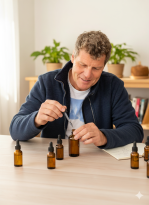
When times are stressful, Bach flower essences can help restore your equilibrium. Try Bach Flower Mix 71 to help with general stress.
Here are a few more tips for finding peace and tranquillity:
A hobby you enjoy will entertain you and occupy your mind. When you're "in the zone", your worries drift away, and you feel calm and relaxed. The hobby itself doesn't matter: crafts such as knitting, sewing, painting, woodwork, baking and jigsaws are popular ways to relax. Hobbies that you can do anywhere, such as reading, are an excellent choice for losing yourself in another world. Outside activities such as running, cycling or paddleboarding will also reduce your stress levels and help you to feel more peaceful.
When you're feeling anxious and stressed, your friends are there to help, but first you need to reach out to them and be honest about how you're feeling. You'll probably find you're not the only one feeling like this. If you haven't seen your friends for a while, organise a meetup, such as a walk in the park or a night out. If social distancing makes this impossible, start planning things to do when the restrictions end - maybe make plans for a trip in the spring!
When the stress of modern life is taking its toll on you, meditation helps you to feel peaceful and relaxed. Find a place where you can be on your own with your thoughts. This could be in a garden or park, or you could create a sanctuary at home where you know you will be undisturbed.
There's a wide range of meditation apps available to guide you. Practising yoga is another good stress-buster. You can perform the poses in your living room or bedroom, and there are numerous free yoga classes online to get you started.
Exercising is an excellent way to reduce stress and anxiety. It might not seem like a peaceful activity while you're doing it! But a gym session, run or cycle ride releases endorphins and leaves you feeling happy and relaxed. Exercise outdoors in daylight whenever possible, as being outside in nature is calming and lifts the spirits.
Try switching off your devices and disengaging from social media, whether for a week, a day or even just an hour. As a minimum, turn off notifications or put your smartphone into aeroplane mode. Researchers found that people enjoy better quality sleep and feel happier when they ban smartphones altogether from their bedrooms.
Your next challenge could be to stop using social media altogether. A study by the British Psychology Society showed that taking a break from Facebook for just five days helps to reduce levels of cortisol in the blood (a marker for increased stress).
Set yourself clear boundaries for using your phone. Ground rules such as no phones at mealtimes, switching to aeroplane mode when you're socialising with family or friends, and restrictions such as no messaging between certain times ( for example, 10 pm and 7 am) help you to live in the moment.
When you're carrying a computer around in your pocket, it's essential to set clear rules about when your working day starts and ends. First, decide on the latest time you will check your emails, and turn off notifications after that time. If you're concerned about what your employer will think, set up an auto-reply letting people know that you are off-duty and when you will respond to their message. This tactic is an increasingly popular way of managing well-being.
Take a look at the various posts on your social media feed and ask yourself how they make you feel? If they're making you feel sad or anxious, unfollow or hide them. On the other hand, seek out things that lift your spirits and make you happier, whether they are funny cat videos, favourite comedians, inspirational people, or educational posts. Recent research has shown that negative social media experiences are related to higher levels of anxiety and low mood. In comparison, more positive experiences were consistently linked to lower levels of worry and depression.
Sources:
https://www.helpguide.org/articles/mental-health/social-media-and-mental-health.htm#:~:text=However%2C%20multiple%20studies%20have%20found,about%20your%20life%20or%20appearance.
https://www.health.harvard.edu/newsletter_article/sleep-and-mental-health#:~:text=Longitudinal%20studies%20suggest%20that%20insomnia,Anxiety%20disorders.
Created by Tom Vermeersch

Tom Vermeersch is a certified Psychologist and Bach flower expert with more than 30 years of experience.

Let's make 2021 better than 2020
For many people, 2020 has been one of the worst years they can remember. The COVID -19 pandemic and social unrest have changed our lives in ways we would not have believed possible a year ago. And when January 2021 comes around, we're still likely to be facing many challenges. Can 2021 be a better year?

20 natural ways to prevent and relieve headaches
Headaches can be a real nuisance, especially if you get them frequently. Luckily, there are many natural ways to prevent and relieve headaches without needing to reach for over the counter medication.

What makes it so hard to go back to work?
Millions of people furloughed for months are now being recalled to work. Others, who have been working from home throughout the lockdown, are returning to the office. And some jobs have simply disappeared: many people are facing redundancy and will soon have to cope with job hunting. Going back to work after an unprecedented length of time at home is quite a challenge.

Did you get stuck in the past?
Do you find yourself often thinking about your past? Do you wish you could turn back the clock to days gone by or things as they were before covid disrupted the world?

Motivation can be somewhat elusive - some days, you just can't seem to make yourself do the stuff you don't want to. But putting things off just leads to stress, frustration and a sense of guilt.

Can you accept things you can't change? Take our quiz!
Your relationship ends, or you lose your job, and you get stuck in a rut of negative thoughts and suffering. How good are you at letting go of grudges and accepting that some things are beyond your control? Take our quiz to find out!

Do you expect too much from others?
Do you expect more from others than they are prepared to give? Signs that you may be asking too much - and how to break the pattern.

Fact or fiction? Is it truly healthy?
There's so much contradictory health advice out there, it gets confusing. One year, butter is said to be bad for you, and margarine is better. The following year, it's the other way around. One article says running causes strain on your joints; another says it's good for you because it increases bone strength.

It's natural to compare our own lives with those of others - weighing up the pros and cons of situations helps us make decisions. But there can be a downside when you find you're constantly comparing yourself with others, envying their seemingly perfect lives and wondering why they are luckier, more prosperous, and better looking than you.

5 tips to survive autumn healthily
We simply can’t avoid noticing the changes all around us. Autumn is here... Autumn is also called a transitional season. Slowly and steadily, it prepares us for the transition...
The world's changed beyond recognition in the last few decades. In 1980, there were only three TV channels to choose from, and not everyone had a landline - people often wrote letters to stay in touch with one another! Computer games were in their infancy, and video recorders were still a novelty. If you wanted something, you would go shopping, or perhaps order it by post and wait a week or two for delivery.
Wind forward to 2020, and everything's available wherever you have an internet connection. A world of information and entertainment is at your fingertips, and you can buy almost anything without needing to leave the house. While this is a positive development, there's a downside: the internet never stops. You're never really alone, and it can be hard to switch off, whether from work or the relentless 24-hour news cycle.

The darker side of advances in technology can have a significant impact on health and well-being, including:
• Poor quality sleep
Over-exposure to the blue light emitted by screens is thought to disrupt sleep patterns, and poor quality sleep makes you more stressed and worried.
• Work-life balance
Because we're "always-on", it's all too easy for work to eat into your time off.
• Social comparison
Social media posts usually paint a rosy picture. These posts can cause you to doubt yourself as you continuously compare and envy other people, who seem to be having a better time than you are.
When times are stressful, Bach flower essences can help restore your equilibrium. Try Bach Flower Mix 71 to help with general stress.
Here are a few more tips for finding peace and tranquillity:
A hobby you enjoy will entertain you and occupy your mind. When you're "in the zone", your worries drift away, and you feel calm and relaxed. The hobby itself doesn't matter: crafts such as knitting, sewing, painting, woodwork, baking and jigsaws are popular ways to relax. Hobbies that you can do anywhere, such as reading, are an excellent choice for losing yourself in another world. Outside activities such as running, cycling or paddleboarding will also reduce your stress levels and help you to feel more peaceful.
When you're feeling anxious and stressed, your friends are there to help, but first you need to reach out to them and be honest about how you're feeling. You'll probably find you're not the only one feeling like this. If you haven't seen your friends for a while, organise a meetup, such as a walk in the park or a night out. If social distancing makes this impossible, start planning things to do when the restrictions end - maybe make plans for a trip in the spring!
When the stress of modern life is taking its toll on you, meditation helps you to feel peaceful and relaxed. Find a place where you can be on your own with your thoughts. This could be in a garden or park, or you could create a sanctuary at home where you know you will be undisturbed.
There's a wide range of meditation apps available to guide you. Practising yoga is another good stress-buster. You can perform the poses in your living room or bedroom, and there are numerous free yoga classes online to get you started.
Exercising is an excellent way to reduce stress and anxiety. It might not seem like a peaceful activity while you're doing it! But a gym session, run or cycle ride releases endorphins and leaves you feeling happy and relaxed. Exercise outdoors in daylight whenever possible, as being outside in nature is calming and lifts the spirits.
Try switching off your devices and disengaging from social media, whether for a week, a day or even just an hour. As a minimum, turn off notifications or put your smartphone into aeroplane mode. Researchers found that people enjoy better quality sleep and feel happier when they ban smartphones altogether from their bedrooms.
Your next challenge could be to stop using social media altogether. A study by the British Psychology Society showed that taking a break from Facebook for just five days helps to reduce levels of cortisol in the blood (a marker for increased stress).
Set yourself clear boundaries for using your phone. Ground rules such as no phones at mealtimes, switching to aeroplane mode when you're socialising with family or friends, and restrictions such as no messaging between certain times ( for example, 10 pm and 7 am) help you to live in the moment.
When you're carrying a computer around in your pocket, it's essential to set clear rules about when your working day starts and ends. First, decide on the latest time you will check your emails, and turn off notifications after that time. If you're concerned about what your employer will think, set up an auto-reply letting people know that you are off-duty and when you will respond to their message. This tactic is an increasingly popular way of managing well-being.
Take a look at the various posts on your social media feed and ask yourself how they make you feel? If they're making you feel sad or anxious, unfollow or hide them. On the other hand, seek out things that lift your spirits and make you happier, whether they are funny cat videos, favourite comedians, inspirational people, or educational posts. Recent research has shown that negative social media experiences are related to higher levels of anxiety and low mood. In comparison, more positive experiences were consistently linked to lower levels of worry and depression.
Sources:
https://www.helpguide.org/articles/mental-health/social-media-and-mental-health.htm#:~:text=However%2C%20multiple%20studies%20have%20found,about%20your%20life%20or%20appearance.
https://www.health.harvard.edu/newsletter_article/sleep-and-mental-health#:~:text=Longitudinal%20studies%20suggest%20that%20insomnia,Anxiety%20disorders.
For many people, 2020 has been one of the worst years they can remember. The COVID -19 pandemic and social unrest have changed our lives in ways we would not have believed possible a year ago. And when January 2021 comes around, we're still likely to be facing many challenges. Can 2021 be a better year?
Read the complete article
Headaches can be a real nuisance, especially if you get them frequently. Luckily, there are many natural ways to prevent and relieve headaches without needing to reach for over the counter medication.
Millions of people furloughed for months are now being recalled to work. Others, who have been working from home throughout the lockdown, are returning to the office. And some jobs have simply disappeared: many people are facing redundancy and will soon have to cope with job hunting. Going back to work after an unprecedented length of time at home is quite a challenge.
Do you find yourself often thinking about your past? Do you wish you could turn back the clock to days gone by or things as they were before covid disrupted the world?
Motivation can be somewhat elusive - some days, you just can't seem to make yourself do the stuff you don't want to. But putting things off just leads to stress, frustration and a sense of guilt.
Your relationship ends, or you lose your job, and you get stuck in a rut of negative thoughts and suffering. How good are you at letting go of grudges and accepting that some things are beyond your control? Take our quiz to find out!
Read the complete article
Do you expect more from others than they are prepared to give? Signs that you may be asking too much - and how to break the pattern.
There's so much contradictory health advice out there, it gets confusing. One year, butter is said to be bad for you, and margarine is better. The following year, it's the other way around. One article says running causes strain on your joints; another says it's good for you because it increases bone strength.
It's natural to compare our own lives with those of others - weighing up the pros and cons of situations helps us make decisions. But there can be a downside when you find you're constantly comparing yourself with others, envying their seemingly perfect lives and wondering why they are luckier, more prosperous, and better looking than you.
We simply can’t avoid noticing the changes all around us. Autumn is here... Autumn is also called a transitional season. Slowly and steadily, it prepares us for the transition...
Read the complete articleBach Flowers are not medicinal but harmless plant extracts which are used to support health.
© 2026 Mariepure - Webdesign Publi4u

Are you unsure which Bach flowers can help you? Contact Tom for free advice.